


Ship Pneumatic Fender
What is Ship Pneumatic Fender
The pneumatic fender is a kind of buffer, also called Yokohama fender, because it was invented in 1985 by a rubber product company in Yokohama, Japan. The interior is filled with high-pressure air. It can be easily deflated, so that it can be easily relocated and re-commissioned. The pneumatic fender is used to absorb the kinetic energy of the ship docking, dock wall or ship docking. Fenders can be applied to all types of ships from cargo ships to cruise ships, ferries and private yachts, and can prevent damage to ships and berthing structures.


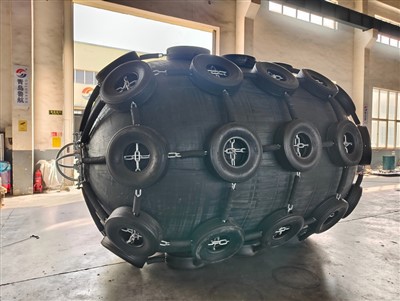

production process
We are a professional manufacturer of airbags and fenders with a history of over 30 years in this industry. We have professional equipment (closed rubber mixing machine, open rubber mixing machine, rubber rolling machine, vulcanization canes and machines, large press machine, etc.). The whole manufacturing process could be controlled by ourselves to ensure the quality.


Transaction Cases
Qingdao LuHang Marine Airbag and Fender Co., Ltd has been devoted to the marine airbags and fenders industry for more than 30 years, Acting as a supplier of many world-class maritime enterprises, such as COSCO, CSIC, Hyundai Heavy Industries Co., Ltd, Mitsubishi Heavy Industries Co., Ltd, etc. Now, LUHANG has occupied the largest market in China and owns Many global customers who depend on professional manufacturers, Strict quality control, and guaranteed after-sale service.


Qingdao Luhang Marine Airbag and Fender Co.,Ltd is located in Jidong industrial Park, Jimo City, Qingdao. Our factory takes up the area of 4,0000㎡ with building area of 30000㎡ and has registered asset of 16million US dollars. We have devoted on marine airbags and fenders about more than 30 years.Luhang relies on its excellent product quality and many years of rich production experience. the products have been exported abroad, reaching the international advanced level, acting as a supplier of many world-class enterprise, such as COSCO, CSIC, Hyundai, Heavy Industries Co.,Ltd, Mitsubishi Heavy Industries Co.,Ltd, and have received support and recognition from customers around the world. Main market: North America, South America, Eastern Europe, Southeast Asia, Africa, Oceania, Mid East, Eastern Asia, Western Europe.


Our certificate


Safety And Reliability
Yokohama Type Pneumatic Rubber Fenders are constructed of several layers of strong tire-cord, and are thus resistant to pressure and cutting. The safety factor adopted in the design of this fender is based on accepted theory and has been proven by extensive experimentation. large-size fenders are equipped with a safety valve to release the inside air in the event of accidental over-pressure.
Advantages At Inclined Berthing
Yokohama Pneumatic Rubber Fenders, energy absorption does not decrease at inclined compression up to 15 degrees.
Most Cost Competitive System
The utilization of the compressive elasticity of air, unlike other fenders which need protector panels, provides completely uniform surface pressure on contact, making Pneumatic Rubber Fenders ideal. The surface pressure of the Yokohama Pneumatic Rubber Fenders is equal to the internal air pressure.
Soft Reaction Force For Ship And Jetty Structure
The reaction force of Pneumatic Rubber Fenders does not increase sharply, even under excess load conditions. Therefore, the Pneumatic Rubber Fenders perform well in such cases, and protect ships and mooring facilities. In contrast, the reaction force of solid rubber fenders, including buckling-type fenders, increases sharply under excess load conditions.
What are the Applications of Ship Pneumatic Fender
Ship-to-Ship (STS) Operation
Fenders used in STS transfer operation offshore are divided into two categories:Primary fenders, which are positioned along the parallel body of the ship to afford the max. Possible protection while alongside.Secondary fenders are used to protect bow and stern plating from inadvertent contact if the ships get out of alignment during mooring and unmooring. It is important that secondary fenders are properly secured and it may be necessary to move secondary fenders prior to unmooring if the likely points of contact have changed due to changes in the freeboards of the two ships.
Ship-to-Dock (STD) Operation
Ship Pneumatic Fender used for STS operation, pneumatic rubber fenders are also used for dock and wharf protection. Compared with traditional solid rubber fenders, pneumatic rubber fenders have perfect energy absorption and soft reaction force. Meanwhile, as floating rubber fenders, they could be adaptable to tide changes. Nowadays, pneumatic rubber fenders are widely used in some large shipyards, docks and ocean platforms.
Types of Ship Pneumatic Fender
Yokohama Marine Fenders
Yokohama marine fender is used worldwide for ship-to-ship (STS) transfer operations, terminals and various types of vessels. Since our inception, we have supplied over millions of fenders to our valuable customers in ship-to-ship (STS) and ship-to-dock (STD) operations worldwide. These fenders play a vital role in the safe operation of ships at berthing and mooring.
Yokohama Rubber Fender
Yokohama rubber fender consist of a thick layer of vulcanized rubber with end flanges that can be inflated with air. The unique characteristic of pneumatic fenders is their low reaction force at low deflections. This characteristic of pneumatic fender makes it the most suitable fender for liquid cargo ships and defense ships with sensitive equipment, and it has become an ideal fender medium widely used on large oil tankers, LPG ships, offshore platforms, etc.

Inflatable Boat Fenders
Inflatable boat fender, also known as inflatable rubber fender or dock ball, is a kind of ship buffering equipment that uses compressed air to absorb impact energy, making the ship more flexible and soft when docked, thereby achieving anti-collision and avoidance Effect. It is widely used in ships, offshore facilities, ocean platforms, ports and terminals, yachts and other fields.
Dock Fender Bumper
Yokohama fenders is also called dock fender bumper. They are the world's leading anti-collision device for ships today. Good performance, pneumatic and durable. Floating rubber for marine docks and ships. This fender is made from synthetic rope-reinforced rubber sheets with compressed air inside, allowing it to float on water and act as a protective medium. Therefore, pneumatic rubber fenders act as a critical protective medium against collisions during ship-to-ship (STS) transfer operations and ship-to-dock (STD) berthing and mooring operations

Components of Ship Pneumatic Fender
Inner rubber
Rely on the fender to ensure the air tightness of the fender to prevent gas leakage and maintain the air pressure of the fender.
Middle layer
The reinforcement layer is the skeleton layer of the fender, which is made up of multiple layers of glued with high strength cord fabric.
Outter rubber
The outer rubber layer covers the outer surface of the fender to protect the fender from external force damage and wear.
Fender Body
Pneumatic rubber fender body.
Counterweight
Used to balance buoyancy and pull the fender to prevent position shift caused by the impact of waves
Segment Analysis:Based on Material, the Pneumatic Marine Fender is segmented as, synthetic rubber, foam, fabric, others. In 2022, The foam segment dominated the market and hold xx% of the overall market share in terms of revenue & it is expected to grow during the forecast period at a CAGR of xx% Detailed information about all segments is covered in the MMR's report.
Regional Insights:The Asia Pacific dominated the global pneumatic marine fender industry in 2022 as a result of industrialization and globalization. Port expansion in emerging economies such as China and India is assisting in the growth of the area. The Asia Pacific developing countries are focused on international trade to expand their economies, which is driving the global pneumatic marine fender There is a higher demand for marine equipment as a result of the existence of key players in the pneumatic marine fender industry in this region. In North America, the market for pneumatic marine fenders is expected to grow gradually.
How do Marine Pneumatic Fenders Protect Your Vessel?

Energy Absorption
Ship Pneumatic Fender are designed to absorb kinetic energy when a vessel comes into contact with a dock, another vessel, or a structure. When the vessel makes contact, the fender compresses and deflects, converting the kinetic energy of the impact into internal energy within the compressed air and rubber structure of the fender. This energy absorption helps prevent damage to both the vessel and the structure it contacts.
Cushioning Effect
Ship Pneumatic Fender and resilience of the rubber material used in pneumatic fenders act as a cushion between the vessel and the berthing structure. This cushioning effect reduces the impact force transmitted to the vessel, protecting its hull and reducing the risk of structural damage.
Vessel Stability
Pneumatic fenders provide stability to vessels during mooring and berthing operations. They minimize lateral and longitudinal movement, preventing the vessel from drifting or swaying excessively, which can be especially important in crowded harbors or during adverse weather conditions.
Low Reaction Force
Pneumatic fenders have a low reaction force, which means they exert relatively low forces on the berthing structure. This minimizes the risk of damage to the quay or jetty and ensures the safety of the dock area.
How to Choose Ship Pneumatic Fender
Understand that vessel dimensions have an impact on fender choice
The type of fender you'll need will depend on the size of vessel you have. A 100,000 tonne cargo ship may be better suited to pneumatic rubber fenders, for example, which play a significant role in reducing damage to the exterior of a vessel during ship-to-ship contact.
Check the type of port you'll be berthing at
Ports vary in terms of function, size, and permissible vessels. When deciding which fenders are best for your application, consider the port you most frequent, and its structure-dolphin, monopile, jetty, and quay wall are some of the most common.Jetty terminals-also referred to as floating terminals-aren't as hardy as they are designed to float. These terminals are used to buffer passenger ships into port.
Understand your local marine environment, or the one in which you travel most frequently
If you berth your vessel in a port which experiences high and low tides, it's important to choose the right fender for this application. Typically, fenders on smaller boats will be applied vertically, ensuring the vessel can still berth at low or at high tide.Windy and wavy seas can cause issues at the port-consider choosing an elongated V-type fender, super cone, or super cell fender equipped with frontal frames in order to avoid your vessel bumping into the port wall.
Certificate
ISO 17357 is the international standard for pneumatic rubber fenders used for marine applications. A certificate for ISO 17357 fenders indicates that the fender has been tested and meets the requirements of this standard. The certificate will typically include information such as the type of fender, the size, and the test results. It is important to ensure that any fender being used for marine applications meets the relevant standards to ensure the safety of vessels and personnel.
Ship Pneumatic Fender Features
- Excellent energy absorption by using compressed air as buffer to counteract collision and squeezing.
- When ships are berthing, mostly there are certain angles, pneumatic fenders secure an oblique contact with ship taking advantages of its unique structure.
- Lager interface areas and smaller counter force.
- Floating on water all the time and moving up and down with tide, pneumatic fenders allow safety berthing with small friction force upon the ships and rubber fender itself.
- Great linear load deflection.
- Lightweight and easy to handle.
- Quick and easy to install and redeploy without bolts and nuts.
- Complying with ISO 17357 standards.

How to Use Marine Pneumatic Fenders
Select suitable pneumatic fenders and determine the correct size and quantity according to the size of the ship and docking requirements. Make sure there is no obvious damage or air leakage on the surface of the pneumatic fender.
Tie the pneumatic fender to the location where the ship needs to dock, usually the side or bow of the ship. Use ropes or chains to fix the pneumatic fender to the ship's berth, ensuring that the pneumatic fender is kept at an appropriate distance from the hull.
According to the docking requirements, the position of the pneumatic fender can be changed by adjusting the length of the rope or chain. Make sure the pneumatic fender is between the boat and the dock to provide cushioning and protection.
When the ship approaches the dock, the pneumatic fender will act as a buffer to reduce the collision force between the ship and the dock. The crew needs to adjust the ship's course and speed according to the position and dynamics of the pneumatic fender to make the ship berth smoothly.
Regularly check the condition of the pneumatic fender to ensure that the surface is clean, has no obvious damage and remains in good inflated condition. Clean, repair or replace promptly if necessary.
How to Properly Keep Ship Pneumatic Fenders
The material of the pneumatic fender is natural rubber. This material will cause the rubber to melt and accelerate the aging of the rubber in a high temperature environment for a long time. Therefore, if you are located in a tropical area, keep it in a cool place and keep it away from fire sources during long-term storage.
In order to avoid adhesion of the rubber inside the pneumatic fender during long-term contact, it is recommended to inflate the fender to a low pressure state of about 20kpa~30kpa.In this way, the internal rubber compound can be well protected in high temperature environments. Of course, we also recommend this for non-high temperature storage.Rubber itself has the characteristics of easy adhesion.
All rubber products cannot be completely corrosion-resistant and resistant to strong acid and alkali chemical liquids. Therefore, if there are corrosive liquids, strong acids and strong alkali chemicals in the warehouse during storage, be sure to keep away from these things during storage. For example, we usually use some disinfectant, rust remover, bleach and so on. In fact, the sea will also have a certain degree of acidity and alkalinity, so the pneumatic fenders that are often soaked on the shore of the port are more prone to aging and cracking. These are completely correct ways.
Many companies that need to use a large number of pneumatic fenders will stack the fenders one by one in order to save storage space. This is pretty wrong storage method! Especially in areas with hot weather, stacking storage will easily cause the external rubber material to melt and deform and the pneumatic fenders will stick together. The correct storage method is to store it in a single tile.
FAQ
Q: What is pneumatic fender?
Q: What is a fender on a vessel?
Q: What are the different types of boat fenders?
Q: What are the different types of pneumatic fenders?
Q: Why is it called pneumatic?
Q: What is the purpose of a fender?
Q: What is the use of a fender?
Q: How do you calculate pneumatic pressure?
Q: What is basic pneumatic?
Q: How does pneumatic work?
Q: How do you size a boat fender?
Q: How do you adjust pneumatic pressure?
Q: What causes fender damage?
Q: Do boat fenders need to be inflated?
Q: What is the difference between boat bumpers and boat fenders?
Q: What is a inflatable marine fender?
Q: What is the pressure in a pneumatic fender?
Qingdao Luhang Marine Airbag and Fender Co., Ltd. is well-known as one of the leading ship pneumatic fender manufacturers and suppliers in China. If you're going to buy customized ship pneumatic fender, welcome to get pricelist and quotation from our factory. For price consultation, contact us.
fender for marine bulk carriers, ship rubber fender, Marine Rubber Fender